Painting with the South African Seabed: Artist Naomi Hart unveils a striking new trio of paintings inspired by our fieldwork in South Africa.
Painting with the South African Seabed
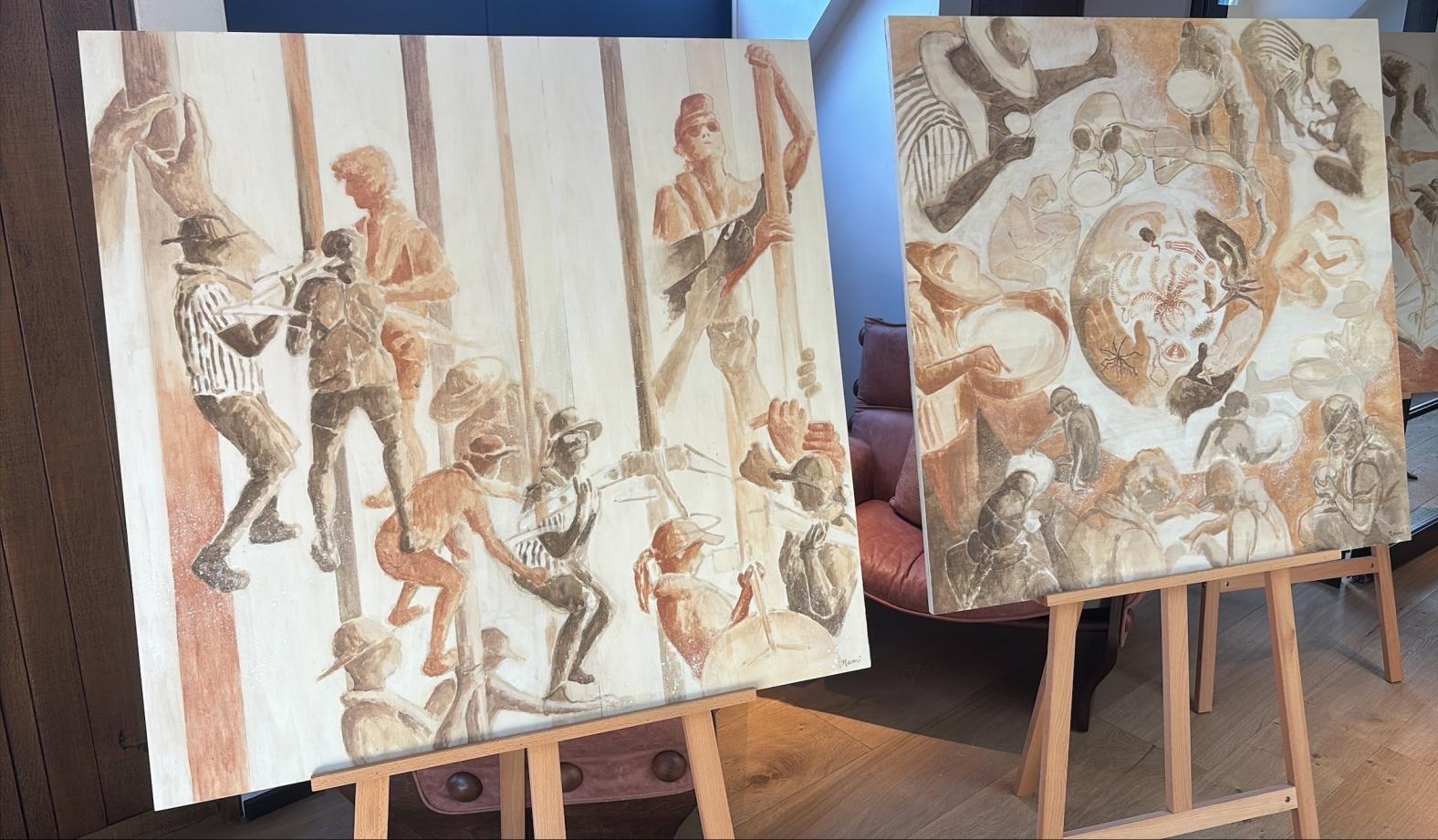
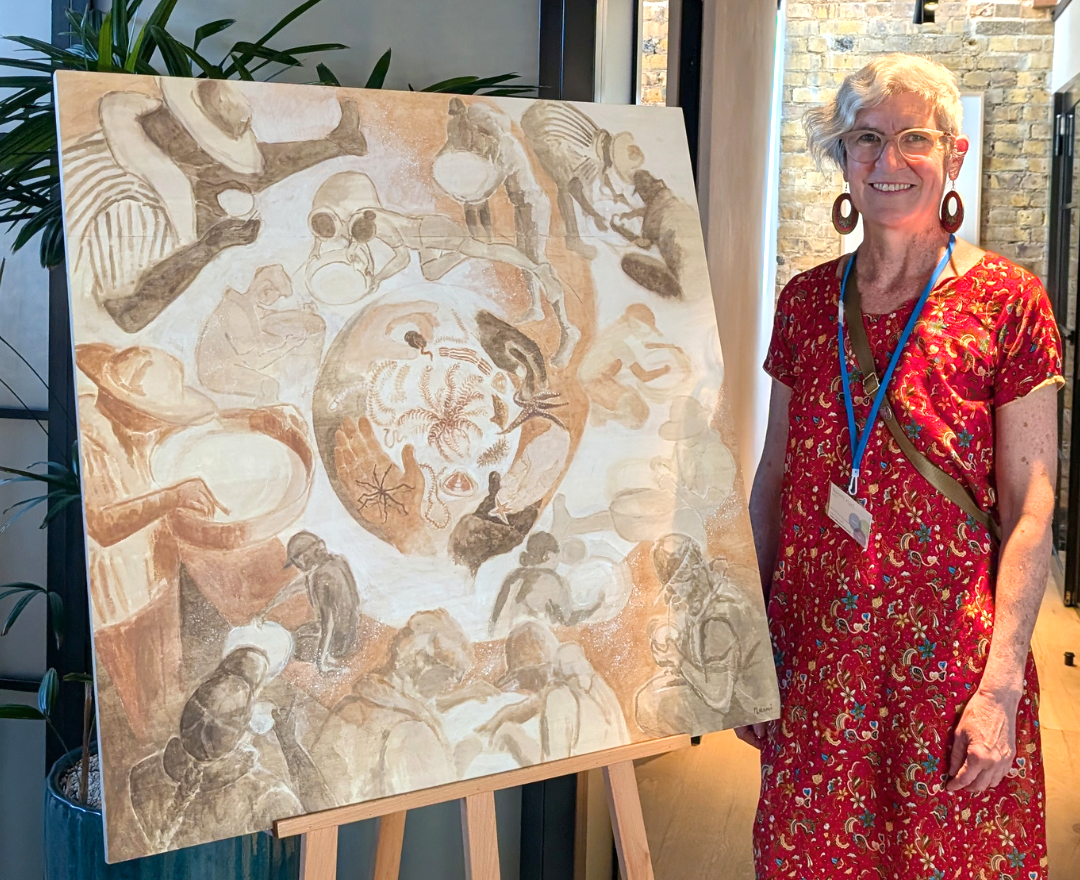
This London Climate Action Week, our artist in residence, Naomi Hart, has unveiled a striking new trio of paintings inspired by her time spent on fieldwork with Convex scientists in South Africa.
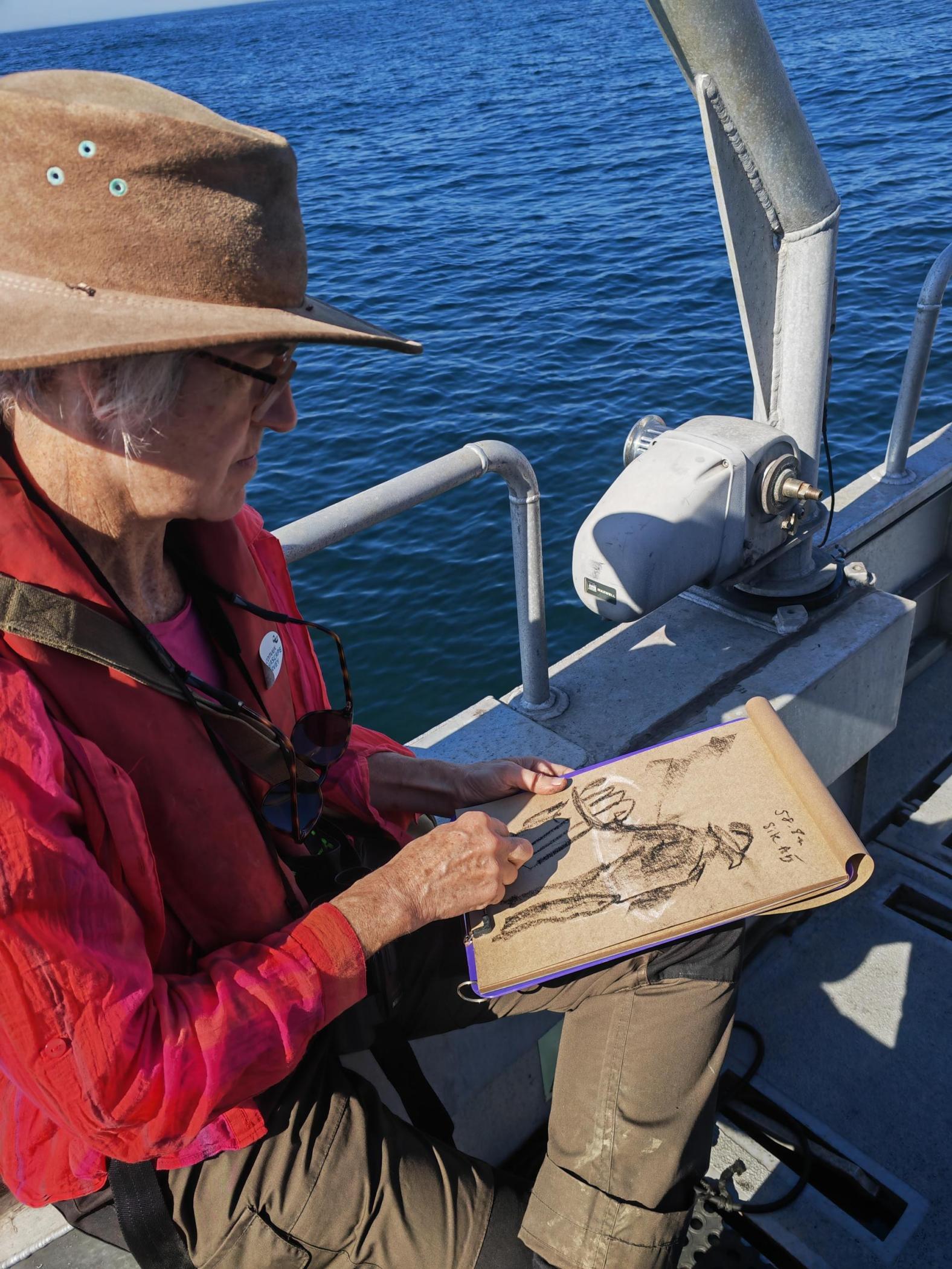
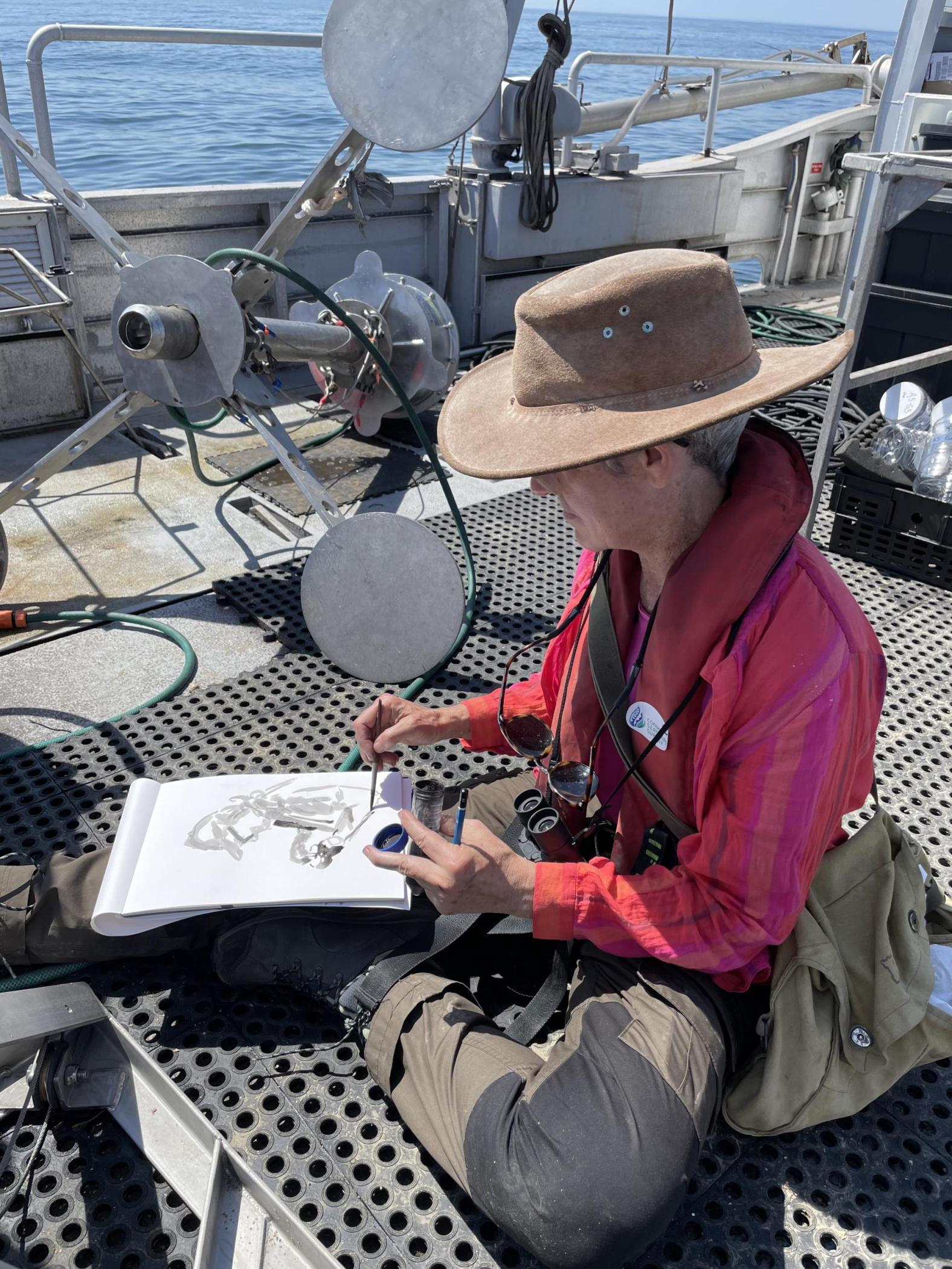
In October 2025, artist Naomi Hart joined our fieldwork expedition studying how rivers, marine life, and human activity influence carbon stores in South Africa’s Algoa Bay. Naomi says:
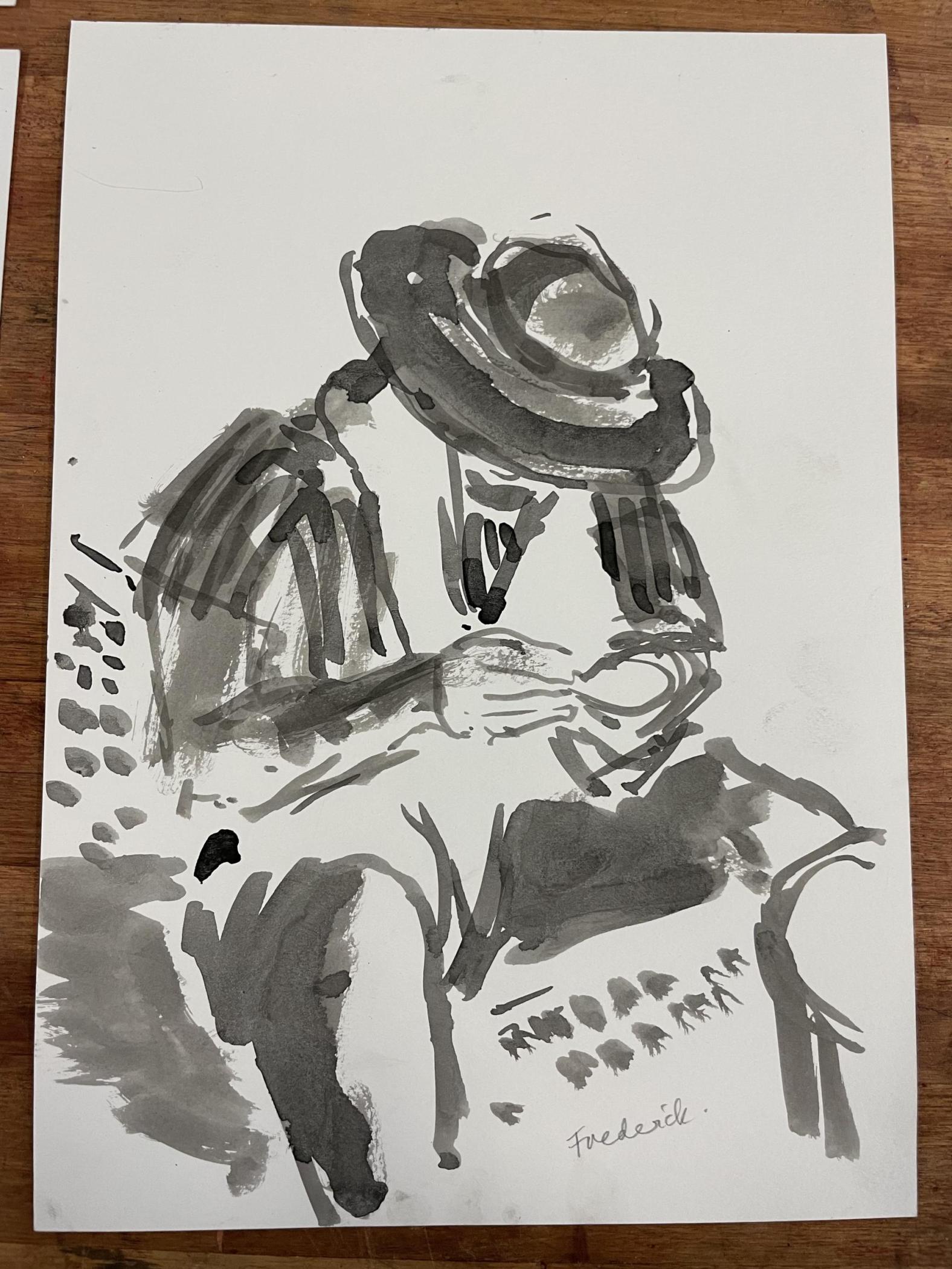
“I sketched the team performing all the research tasks: from ‘weightlifting’, charging and emptying the vibro-corer, to launching and recovering the mud-grab, and painstaking and meticulous forceps work with the sieves.
The fun of live-action sketching is that the subjects very rarely stand still. So, my skill comes in trying to capture them despite this, at the same time as being on a moving vessel with salt spray coating me and the paper, and wind trying to steal my work and return it to the ocean.
Each of these three painting represents one of the instruments or activities I observed onboard. I’ve tried to capture the ‘feel’ of the research, as well as the people involved, the team spirit and the hard work. I wanted to show the tiring, repetitive, back-breaking tasks, contrasting with the precision of careful measurements, some of the incredible sea life found on the seabed, and the care and humanity shown when working with living creatures.
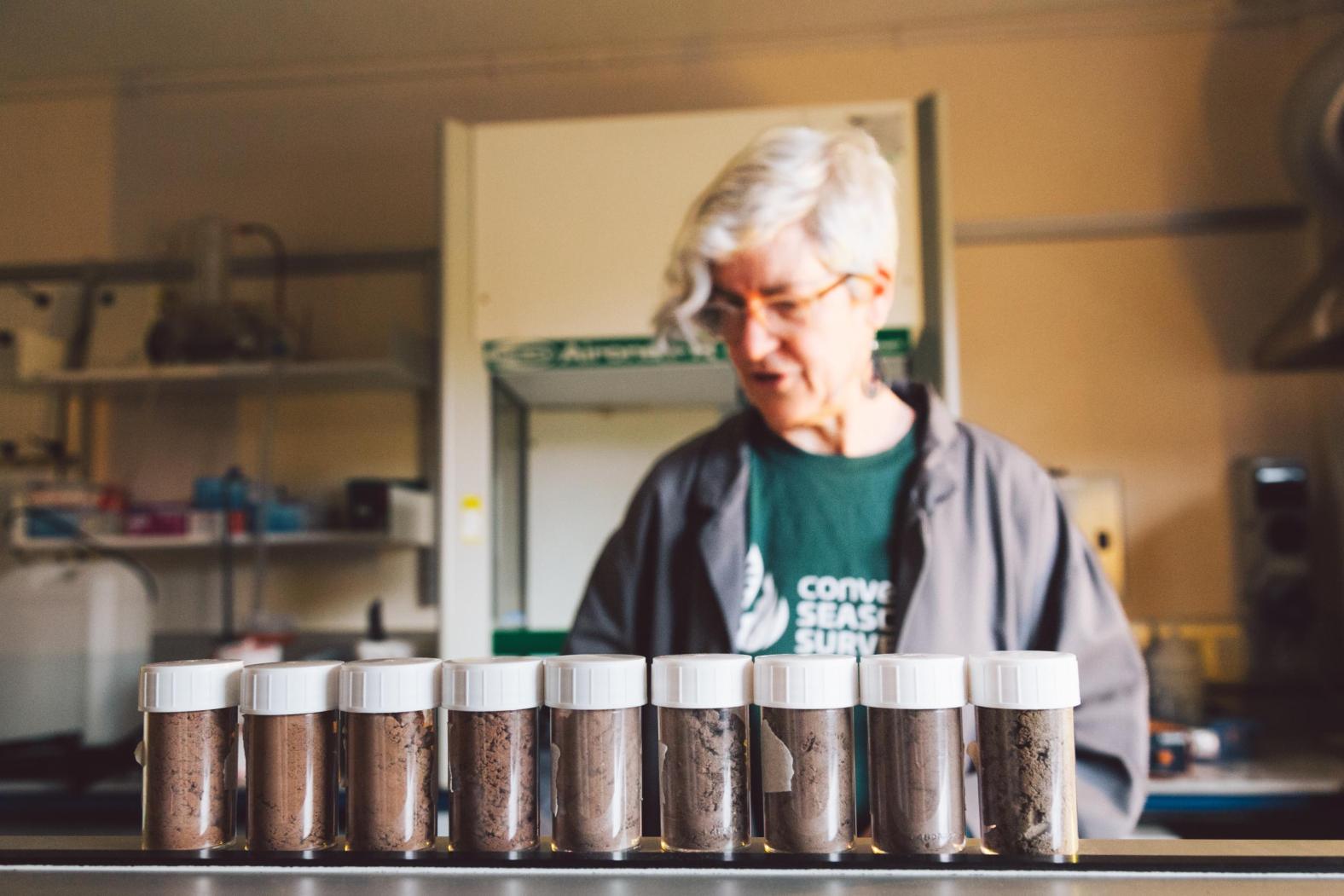
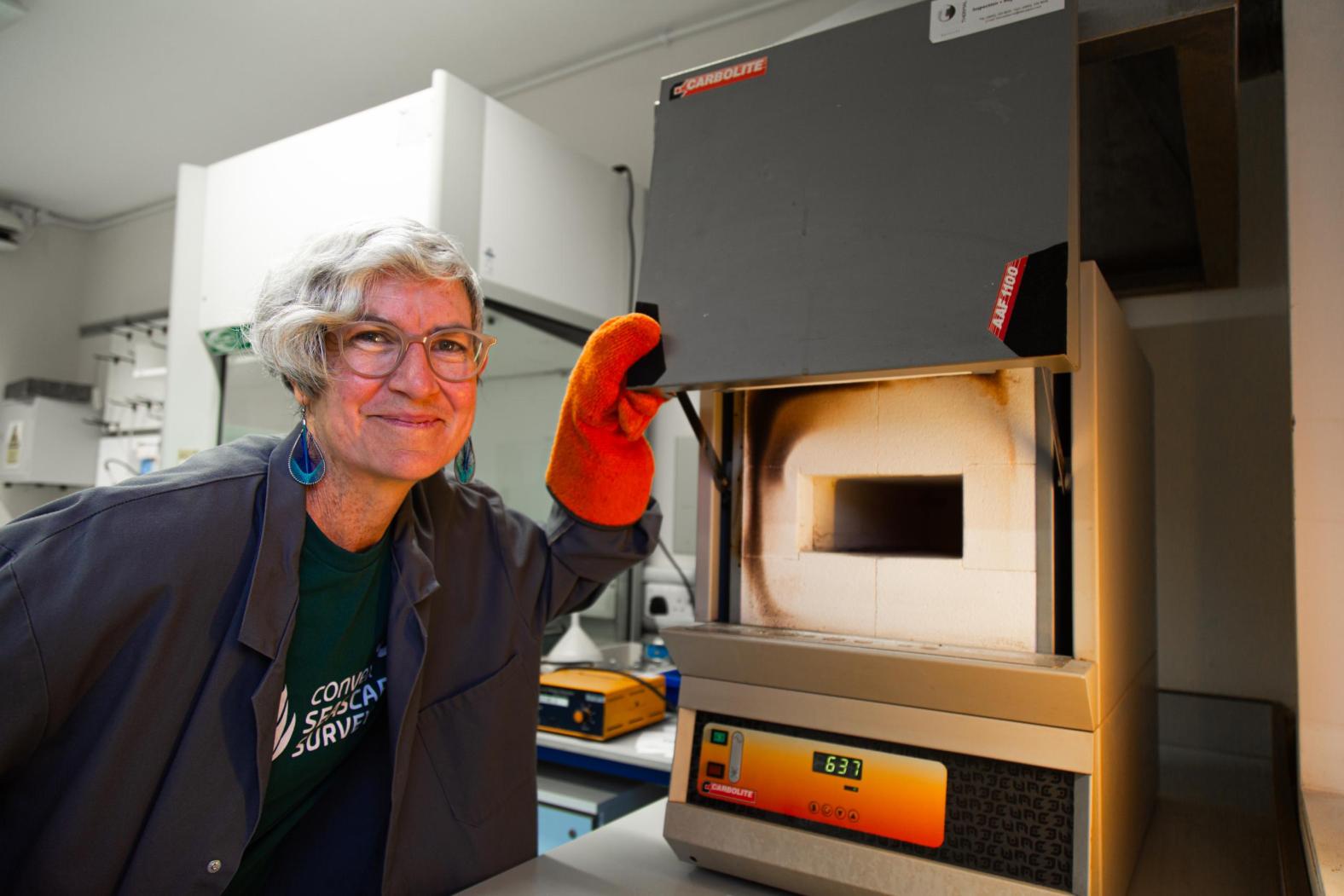
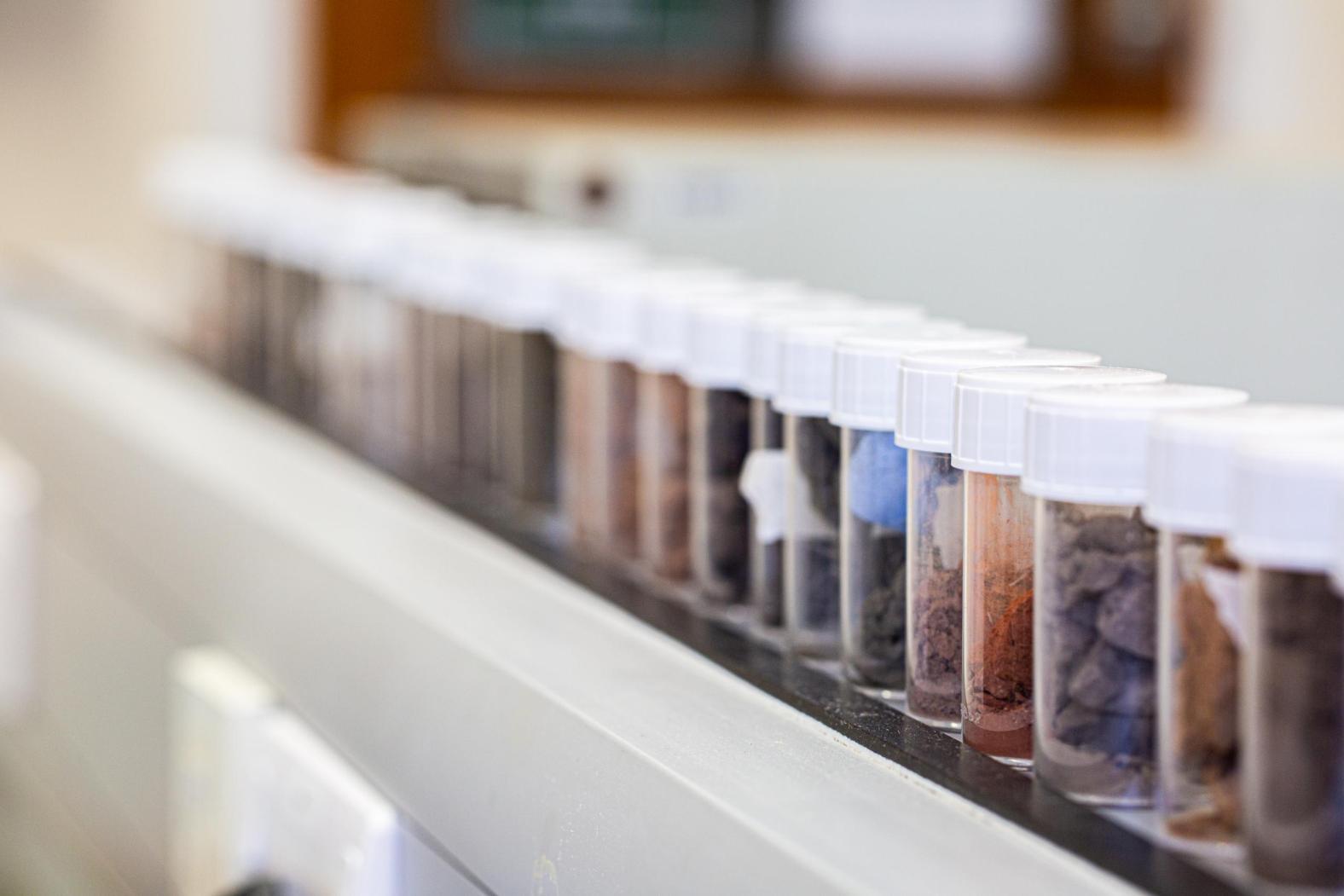
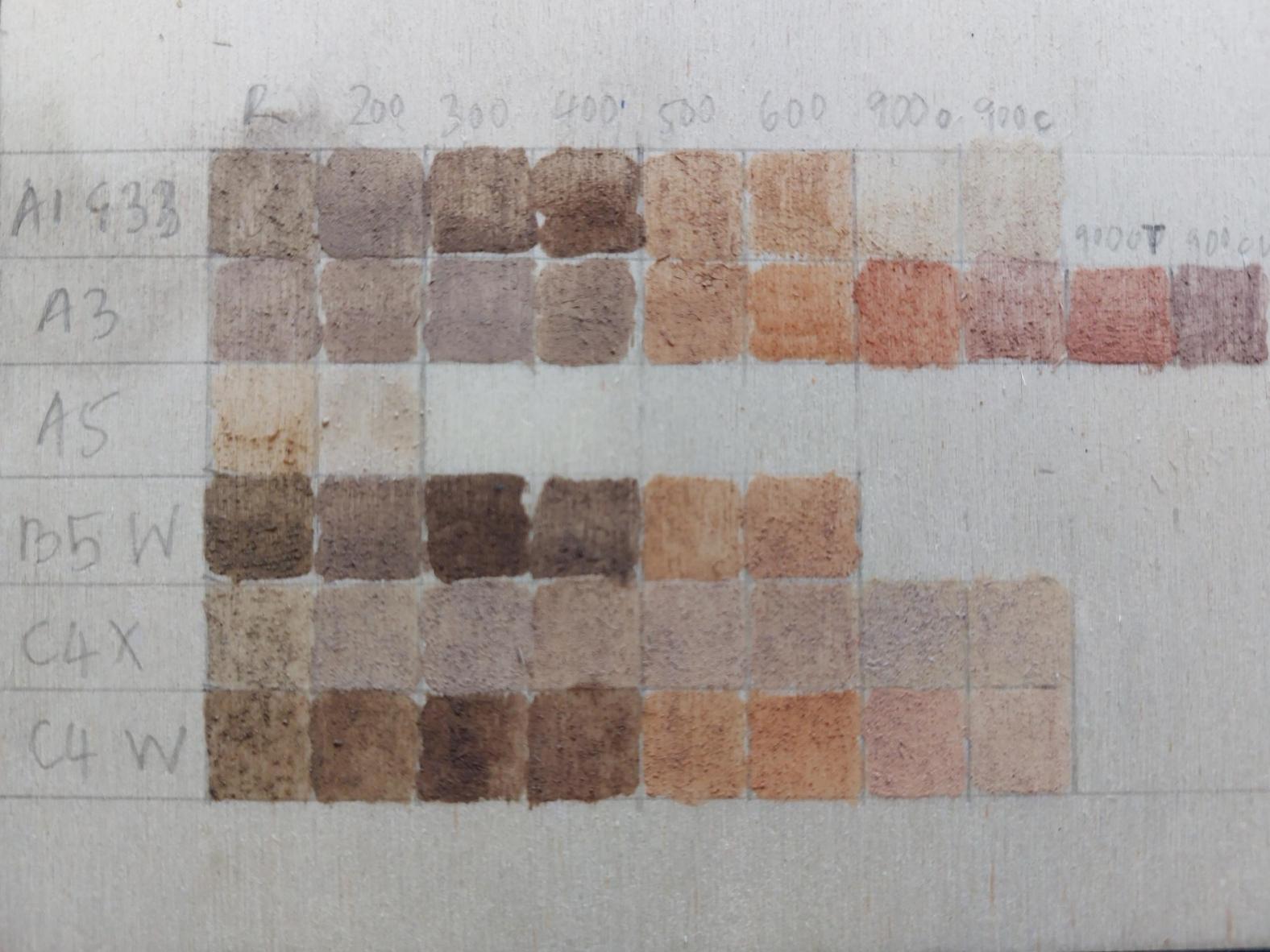
Most of my art uses project-specific, relevant media and materials. These paintings have been made entirely with sediment from Algoa Bay. I kept samples of the discarded mud from several of the research sites and, with support from the University of Exeter, I heated the sediment to different temperatures and mixed with a casein binder to make paint. Every colour you see comes from the seabed.
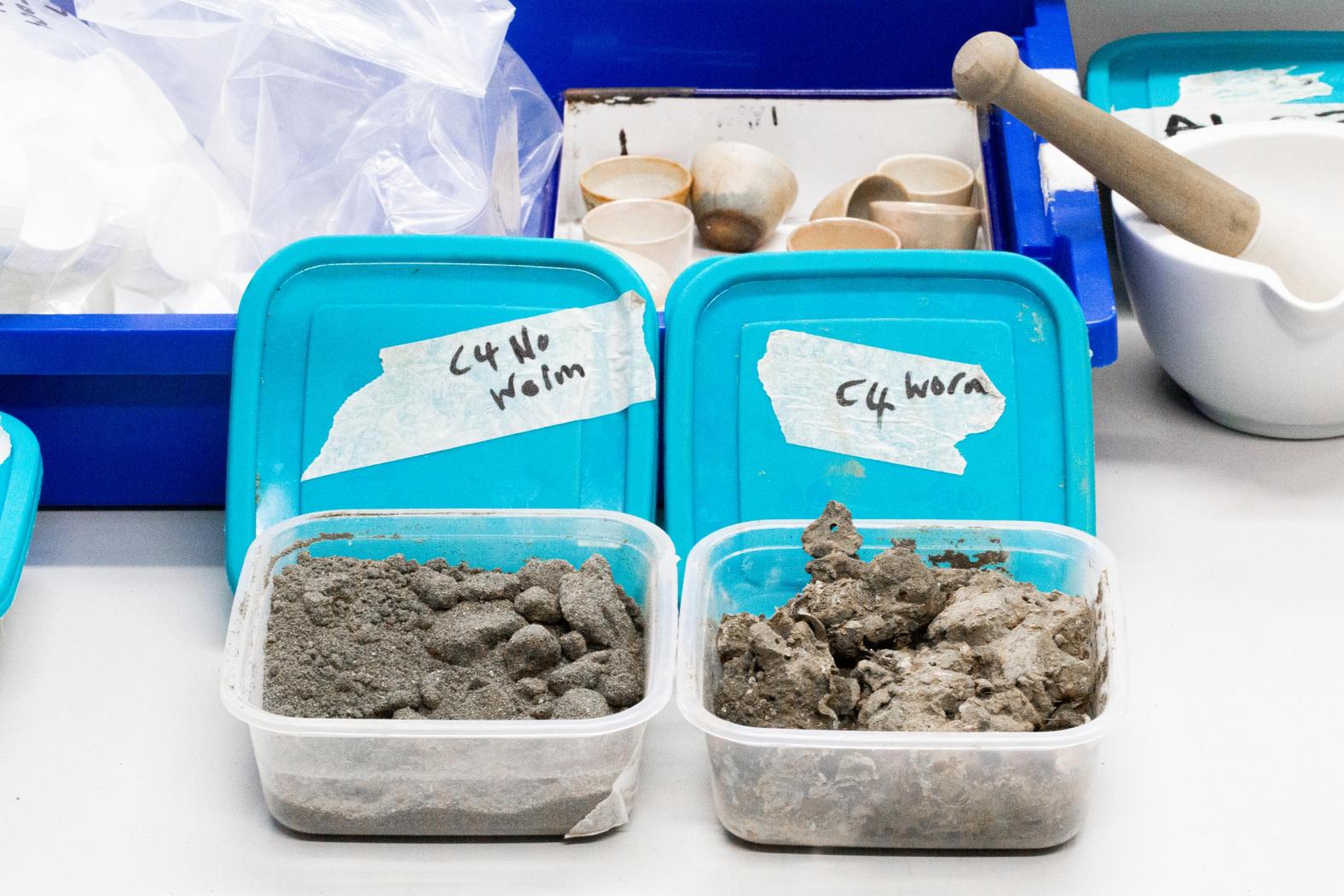
The colours also reveal part of the science. Darkening sediments can indicate higher organic content, while brighter reds and oranges remain after organic material burns away, revealing iron rich sediment underneath. In some samples, it was clear that worms were actively changing the chemistry of the seabed.
I feel there’s an appetite for real, tangible art and for learning about the messy, hard, nitty-gritty of fieldwork. I hope that my work plays some small part in increasing public trust in science and in raising the profile of the ocean as a nature based solution to climate change.”
Find out more about Naomi’s work here: Naomi Hart